
Being asked to give a eulogy is an honour. It can also feel daunting. How do you sum up a whole life in a few minutes, while you are grieving yourself?
The good news is that a eulogy does not need to be perfect or polished. It needs to sound like you, and it needs to help people remember the person they loved.
This guide explains how to write a eulogy step by step: gathering stories, shaping them into a structure, and feeling ready on the day.
What is a eulogy?
A eulogy is a short speech given at a funeral, memorial service or celebration of life. It celebrates the person who died, reflects on who they were, and gives the people gathered a shared moment of remembering.
It is different from an obituary, which is a written notice that usually includes key facts such as dates, family members and service details. A eulogy is more personal. It is about character, relationships and stories.
Most eulogies last between three and seven minutes, which is roughly 400 to 1,000 spoken words. Check with the family or whoever is leading the service, as timings can be tight.
Step 1: Gather stories and memories
Before you write a word, collect material. Give yourself permission to gather far more than you will use.
Ask yourself
- What three words best describe them?
- What did they care about most?
- What made them laugh?
- What did they teach you?
- What is a moment with them you will never forget?
- What little habits or sayings were completely "them"?
Ask others
Talk to family, friends, colleagues and neighbours. Different people knew different sides of them. A friend from school, a colleague and a grandchild may each describe someone you only partly recognise.
Helpful questions to ask:
- "What's your favourite story about them?"
- "How did you meet?"
- "What do you think they'd want people to remember?"
If the family has an online memorial page, the tributes people have left there can be a rich source of stories. On Forever In Our Hearts, relatives and friends often share memories you may never have heard, which can help you capture the fuller picture of someone's life.
Look through keepsakes
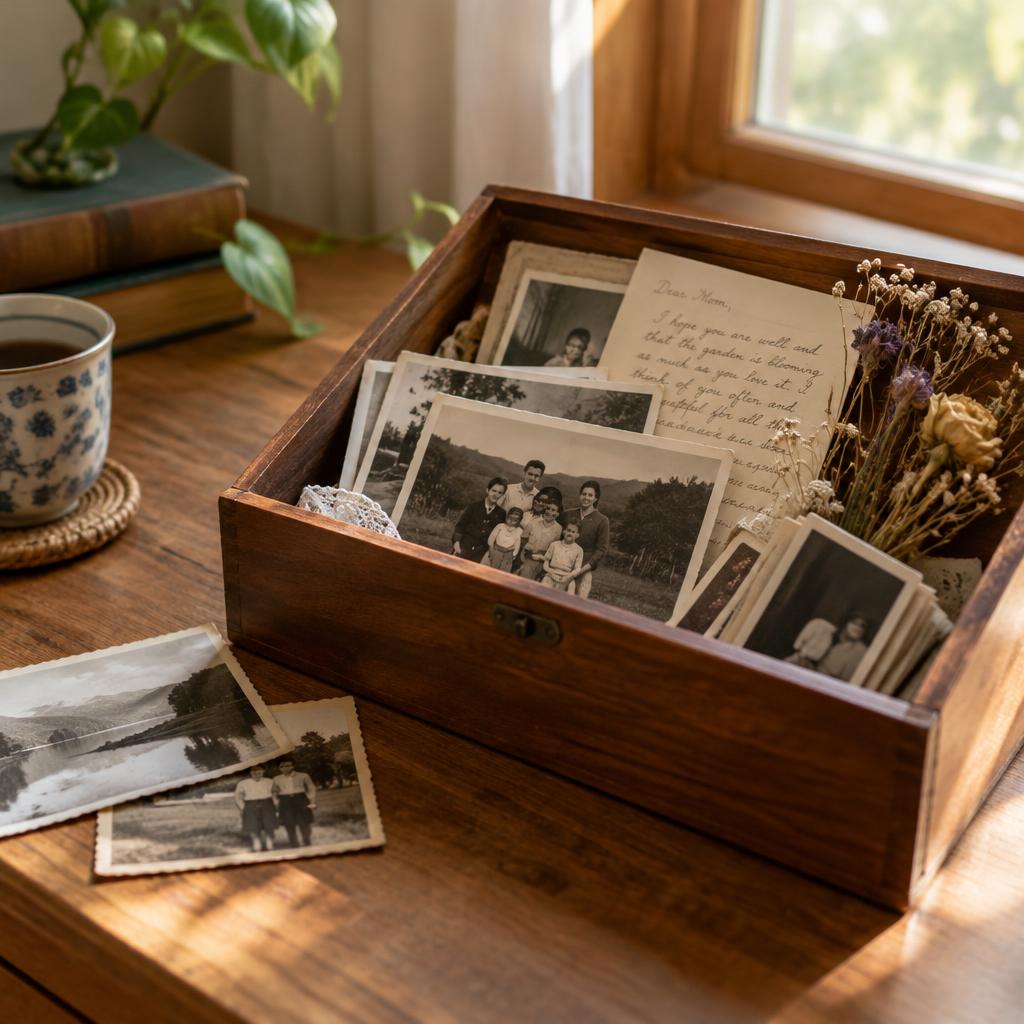
Photos, letters, cards, recipe books and old messages can bring back details you had forgotten. A memory box is a lovely place to start.
Step 2: Choose a theme or thread
The strongest eulogies are not a list of achievements. They have a heart, a central idea that links the stories together.
Your theme might be:
- A quality they were known for, such as generosity, stubbornness, curiosity or humour
- A role they played, such as "the one who held the family together"
- A phrase they always said
- A passion that shaped their life, such as music, gardening, football or faith
Once you have a theme, choose two or three stories that bring it to life.
Step 3: Structure your eulogy
A simple structure makes writing easier and helps listeners follow along.
1. Opening
Introduce yourself and your relationship to the person.
"For those who don't know me, I'm Daniel, and Margaret was my grandmother. For the last thirty years, she was also my biggest fan and my toughest critic."
2. A brief picture of their life
Share a few key points, such as where they grew up, their family, their work, and the things that filled their days. Keep this short. The details are often already in the order of service or obituary.
3. Stories that show who they were
This is the heart of the eulogy. Choose two or three specific stories that reflect your theme. Specific details make people feel the person in the room: the smell of their kitchen, the song they always sang in the car, the way they signed every card.
4. What they meant to others
Reflect on their impact. What did they give the people around them? How will they continue to shape your life?
5. Closing
End with something simple and heartfelt. This might be a direct goodbye, a favourite saying, a short reading or a line of a poem that mattered to them.
"Grandma always ended our phone calls with 'Go on then, off you go.' So, Grandma, this time it's our turn. Go on then. We love you."
Step 4: Find the right tone
A eulogy can hold both sadness and laughter. Gentle humour often brings comfort, because it reminds people of the person as they really were.
A few tips:
- Speak as yourself. Use the words you would use in conversation.
- Be honest. You do not need to make anyone a saint. Small flaws, lovingly told, can make a eulogy feel true.
- Be inclusive. Remember that people in the room may have different beliefs and relationships with the person.
- Avoid private jokes that only one or two people will understand.
- Leave out difficult family matters. A funeral is not the place to settle disagreements.
Step 5: Edit and practise
Once you have a draft:
- Read it aloud. You will hear what flows and what feels awkward.
- Time it. Cut where you need to, keeping your strongest stories.
- Print it in a large font with wide spacing, so it is easy to read through tears.
- Mark pauses, and places to take a breath.
- Practise in front of someone you trust.
Getting through it on the day
It is completely normal to cry while giving a eulogy. Everyone in the room understands.
Some things that help:
- Keep a glass of water and tissues nearby.
- Look up at a friendly face if you need steadiness.
- Pause and breathe if your voice breaks. People will wait.
- Ask someone to be your back-up reader, with a copy of your speech, in case you cannot continue.
Frequently asked questions
How long should a eulogy be?
Most eulogies last three to seven minutes, which is about 400 to 1,000 spoken words. If several people are speaking, you may be asked to keep it shorter, so check with the family or celebrant first.
What should you not say in a eulogy?
Avoid private jokes, family conflicts, unkind stories and very personal details the family might not want shared. Steer clear of anything that could embarrass the person or upset those listening.
Can I read a poem instead of writing a eulogy?
Yes. Many people choose a poem, a reading or a passage from scripture, either on its own or alongside a few personal words. A short introduction explaining why it reminded you of them can make it feel more personal.
Their story, in your words
A eulogy will never capture everything about a person. It does not have to. It simply offers the people who loved them a moment to remember together, through your eyes.
Once the service is over, your words can live on. Many families share the eulogy on their loved one's memorial page so those who could not attend can read it too. You can create a free memorial at Forever In Our Hearts. And if you are still in the early days, our checklist on what to do in the first week after a death may help.