After someone dies, their things can be scattered everywhere. A birthday card in a drawer. A watch on a bedside table. A shopping list in their handwriting, still stuck to the fridge.
A memory box brings some of those pieces together in one place. It is a hands-on way to keep the objects that tell their story, so you can open it whenever you want to feel close to them.
There is no right or wrong way to make one. This guide offers a few ideas to help you begin.
Why a memory box can help
Grief often leaves us with nowhere to put our feelings. Making something with your hands can give those feelings a shape.
A memory box can:
- Keep precious things safe, rather than lost in cupboards or boxed up with everything else.
- Give you a place to return to on anniversaries, birthdays or ordinary days when you miss them.
- Help children understand loss by giving them something to hold, sort and talk about.
- Bring family together, as relatives add their own memories and objects over time.
You do not need to make it straight away. Some people start in the first few weeks. Others wait months or years until they feel ready. Both are fine.
Choosing the right box
The box itself can be as simple or as special as you like. Some ideas:
- A sturdy shoebox you decorate together as a family
- A wooden keepsake box, plain or engraved with their name
- An old suitcase, biscuit tin or toolbox that belonged to them
- A clear storage box, so you can see what is inside
Think about size. If you plan to keep clothing, books or larger items, choose something roomy. For photos and letters, a smaller box may feel more personal.
If you want to protect photos and papers for the long term, look for acid-free tissue paper or archival sleeves. They help stop pictures yellowing or sticking together.
What to put in a memory box
The best memory boxes are full of things that only make sense to the people who loved them. Here are some starting points.
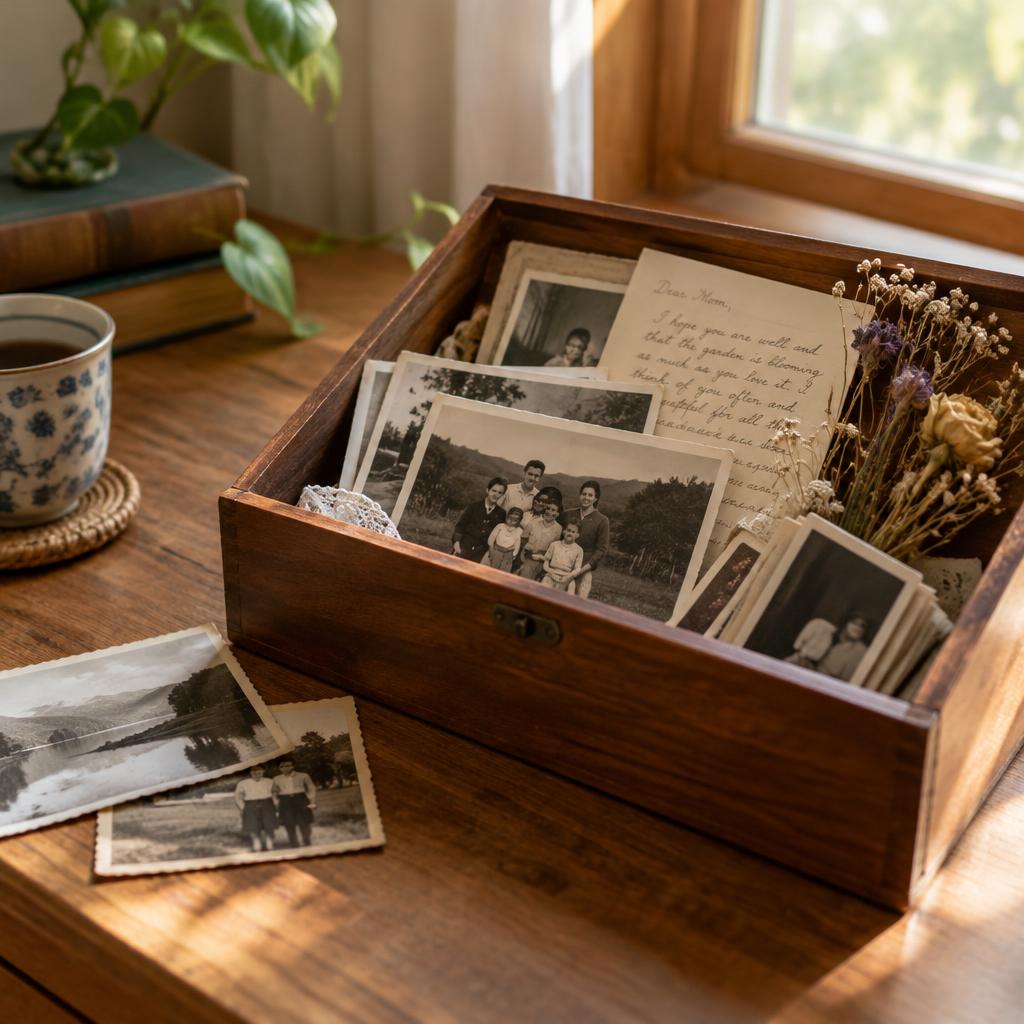
Photos and handwriting
- Favourite photos, including the candid, blurry ones
- Cards and letters they wrote to you
- Notes, recipes or lists in their handwriting
- Postcards they sent from trips
Handwriting is often one of the things people treasure most. Even a few scribbled words can bring someone back in an instant.
Objects with a story
- A piece of jewellery, a watch or their glasses
- A favourite scarf, tie or jumper
- Their keyring, pen or reading bookmark
- Something from their hobby, such as a fishing lure, knitting needles or a golf ball
Sounds and scents
- A bottle of their perfume or aftershave
- A USB stick with voice messages, videos or a playlist of songs they loved
- A small fabric pouch sprayed with their scent
Everyday reminders
- Ticket stubs from concerts, matches or films you saw together
- A menu from their favourite restaurant
- A pressed flower from their garden
- The order of service from their funeral or celebration of life
Your own words
Write a letter to them. Tell them what you miss, what you are proud of, or what has happened since they died. Some families add a new letter every year on their birthday.
How to make a memory box, step by step
1. Gather slowly. Walk through their home or your own and collect items as you find them. You do not have to decide everything in one afternoon.
2. Sort into groups. Lay things out on a table. You might group them by time of life, such as childhood, work, family and later years, or by theme.
3. Add labels and notes. A small tag explaining an object can turn it into a story. "Dad wore this hat on every fishing trip from 1987 onwards" means far more to a grandchild than a hat alone.
4. Decorate the box. Paint it, cover it in fabric, add their name, or leave it plain. Children often enjoy this part.
5. Leave room to grow. Memories keep surfacing. Leave space so you can add to it as time goes on.
Making a memory box with children
Children can find it hard to put grief into words. Making a memory box gives them a way to remember without needing to explain how they feel.
Let them choose a few items themselves, even if their choices seem small or unexpected. A bus ticket or a sweet wrapper may hold a memory that matters deeply to them.
You might also invite them to draw a picture, write a short message or record themselves telling a favourite story about the person. Our guide on helping children through grief has more ideas.
Ideas for sharing and preserving memories
A physical box is lovely, but it lives in one home. Family and friends who live far away may also want to look through those memories.
A few ways to share:
- Photograph each item and write a sentence or two about why it matters.
- Scan letters and photos so copies are safe if the originals are damaged.
- Make a smaller box for each family member, with a few shared items in each.
- Create an online memorial where everyone can add photos, videos and stories.
At Forever In Our Hearts, many families use their memorial page as a digital companion to a physical memory box. Relatives can upload the photos they have, share stories in written tributes, and light a virtual candle on special days, wherever they live.
Other memorial ideas you might like
A memory box can sit alongside other ways of remembering:
- A memory quilt made from their clothing
- A memory jar filled with notes from friends and family
- Planting a tree or rose in their name
- An annual gathering on their birthday to share stories
If you are approaching a difficult date, you may find our article on facing the first anniversary of a loss helpful.
Frequently asked questions
What do you put in a memory box for someone who has died?
Anything that reminds you of them. Common choices include photos, letters, jewellery, a favourite piece of clothing, ticket stubs, a bottle of their perfume, and notes in their handwriting. Many people also add a letter they have written to the person.
When should I make a memory box after a loss?
Whenever you feel ready. Some people find comfort in starting soon after the funeral. Others wait months or years. There is no deadline, and you can add to the box over time.
How do I stop photos and letters from getting damaged?
Store them flat in a cool, dry place out of direct sunlight. Acid-free tissue paper and archival sleeves help protect them. It is also worth scanning or photographing important items so you have a digital copy.
A place for every memory
A memory box will never hold everything about the person you love. It is not meant to. It holds a few pieces of them, chosen with care, so you have something to come back to.
If you would like a place where family and friends can add their own photos and stories too, you can create a free memorial page at Forever In Our Hearts.