For many people, the weeks before a first anniversary feel strangely heavy. You may notice it before you realise why. You are more tired. Small things upset you. The date keeps catching your eye on the calendar.
The first anniversary of a death is a milestone that few people talk about, yet almost everyone who has lost someone close feels it. This article looks at why the day can be so hard, and offers some gentle ways to plan for it.
Why the first anniversary can feel so heavy
It marks a full year of "firsts"
The first year after a loss is full of firsts. The first birthday without them. The first holiday season. The first summer, the first family wedding, the first ordinary Tuesday when you reached for your phone to call them.
The anniversary closes that cycle. It can feel like proof that time is moving on, even when you do not feel ready for it to.
The days leading up to it can be harder than the day itself
Many people find that the anticipation is the most difficult part. Your mind may replay the final weeks, the phone call, the hospital, the conversations you had or did not have.
This is very common. It does not mean you are going backwards.
Other people may have moved on
In the first months, friends often check in. By the one-year mark, those messages may have slowed. It can feel lonely when your grief is still close and the world around you seems to have returned to normal.
You may feel pressure to be "better" by now
There is no timeline for grief. One year is not a finishing line. Some people feel more settled by the anniversary; others find the second year harder than the first. Both experiences are normal.
Planning for the day
Not everyone wants to plan. But having even a loose idea of how you will spend the day can make it feel less overwhelming.
Decide who you want to be with
Ask yourself honestly:
- Do I want company, or would I rather be alone?
- Who would I feel comfortable being sad around?
- Would I prefer a busy day or a quiet one?
It is fine to say no to invitations. It is also fine to ask someone to spend the day with you.
Choose something meaningful, or nothing at all
Some people mark the day with a gathering or ritual. Others prefer to let it pass quietly. Neither choice says anything about how much you loved them.
Let others know what you need
Friends and family often want to help but do not know how. A simple message can go a long way: "The anniversary is next Thursday. I'd love it if you sent a message on the day," or "I'm planning to stay home. Please don't worry if I'm quiet."
Plan something small for afterwards
Having something gentle to look forward to the following day, such as a walk, a meal with a friend or a favourite film, can help the anniversary feel less like a cliff edge.
Ideas for marking the first anniversary
Here are some ways people choose to remember someone on the first anniversary. Take what feels right and leave the rest.
Quiet, personal ideas
- Visit a place that mattered to them, such as a park, beach, café or their resting place.
- Write them a letter about the past year, what you have learnt, and what you miss.
- Cook their favourite meal or a recipe they used to make.
- Listen to their favourite music or watch a film you loved together.
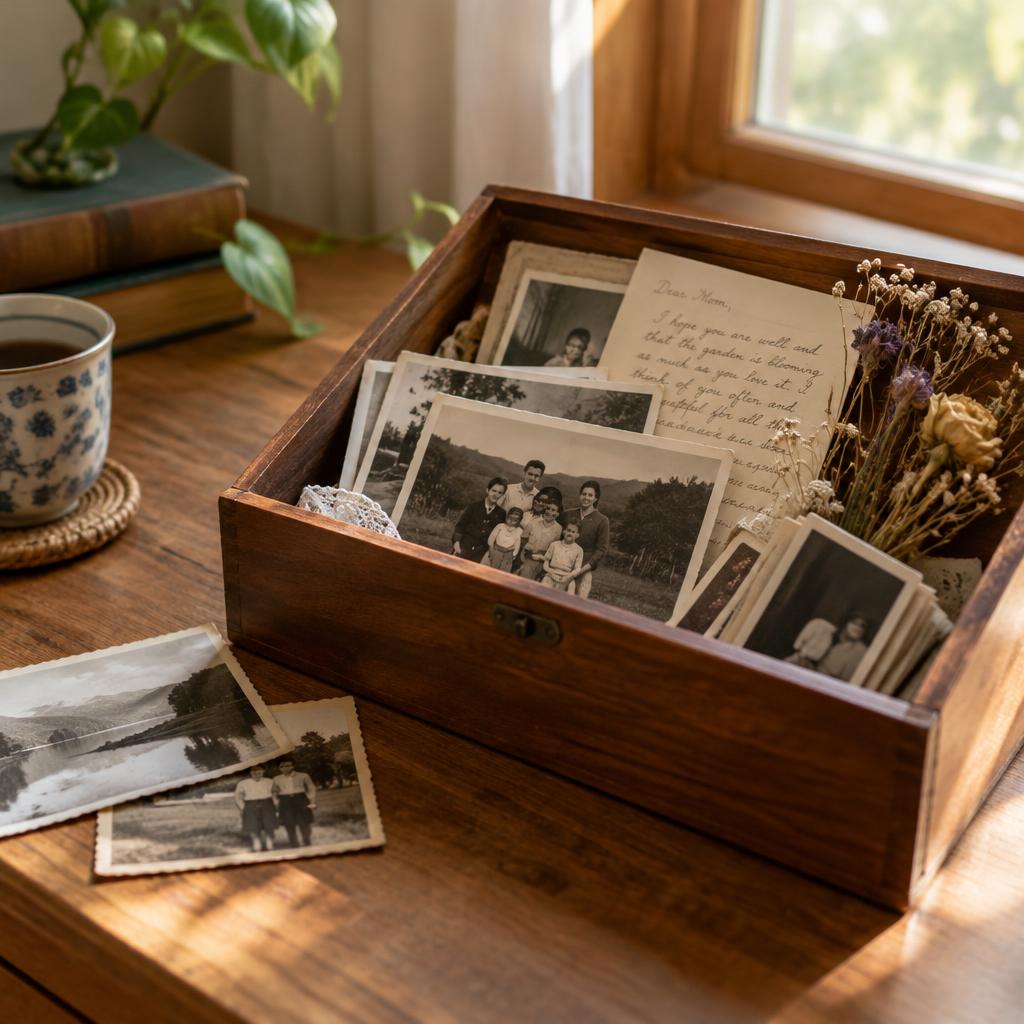
- Look through photos or open a memory box. Our guide to creating a memory box has ideas if you have not made one yet.
Ideas for gathering with others
- Host a small meal and invite everyone to bring a story.
- Hold a memorial or remembrance service, formal or informal, depending on your family's faith and traditions.
- Go on a walk together along a route they loved.
- Raise a glass at their favourite pub or restaurant.
Ideas that look forward
- Plant a tree, rose or bulbs that will flower every year around the anniversary.
- Donate to a cause they cared about, or volunteer for a day in their name.
- Start a tradition, such as a yearly hike, a family dinner, or a bonfire.
- Try something they always wanted to do, as a way of carrying a part of them with you.
Remembering together when family is far apart
Families today are often spread across cities, countries and time zones. Not everyone can be in the same room on the anniversary.
An online memorial can give everyone a shared place to remember. On Forever In Our Hearts, family and friends can post a new photo, write a tribute, or light a virtual candle on the day, so the people who loved them can see that others are remembering too.
Some families also host a short video call, sharing a story each, followed by a moment of quiet.
Taking care of yourself around the anniversary
Grief can affect your body as well as your mind. In the days around the anniversary:
- Be gentle with your expectations. Lower your to-do list where you can.
- Rest. Grief is tiring, and disrupted sleep is common.
- Eat regular meals, even if they are simple.
- Get outside for a short walk if you can.
- Notice how you are feeling without judging it. Sadness, anger, relief, guilt and even laughter can all show up.
If your grief feels as raw now as it did in the first weeks, or it is making everyday life very hard, it may help to talk to your doctor, a bereavement counsellor or a local grief support service. Reaching out is a sign of care for yourself, not a sign that you are grieving "wrong".
Supporting someone else through a first anniversary
If someone you know is approaching a first anniversary, you can make a real difference with something small:
- Put the date in your calendar.
- Send a message on the day that uses their loved one's name.
- Share a memory or a photo they may not have seen.
- Offer something specific, such as "Can I bring dinner round on Thursday?"
Our article on what to say to someone who is grieving has more gentle phrases you can use.
Frequently asked questions
Why is the first anniversary of a death so hard?
It marks the end of a full year of "firsts" and can bring back vivid memories of the time around the loss. It can also arrive when other people have stopped checking in, which can make grief feel lonelier.
What should I do on the first anniversary of a loved one's death?
Whatever feels right for you. Some people gather with family, visit a meaningful place or hold a remembrance service. Others prefer a quiet day at home. Writing a letter, cooking their favourite meal or planting something in their memory are all common choices.
Is it normal to feel worse before the anniversary than on the day itself?
Yes. Many people find the days or weeks leading up to the anniversary harder than the date itself. This is often called anticipatory or anniversary grief, and it usually eases after the day has passed.
A day to honour, not a test to pass
The first anniversary is not a measure of how well you are coping. It is simply a day when love and loss feel close together.
However you choose to spend it, you might find comfort in knowing others are remembering too. If you would like a shared space where family and friends can gather on the day, wherever they are, you can create a free memorial at Forever In Our Hearts.